Location: Brooklyn, NY
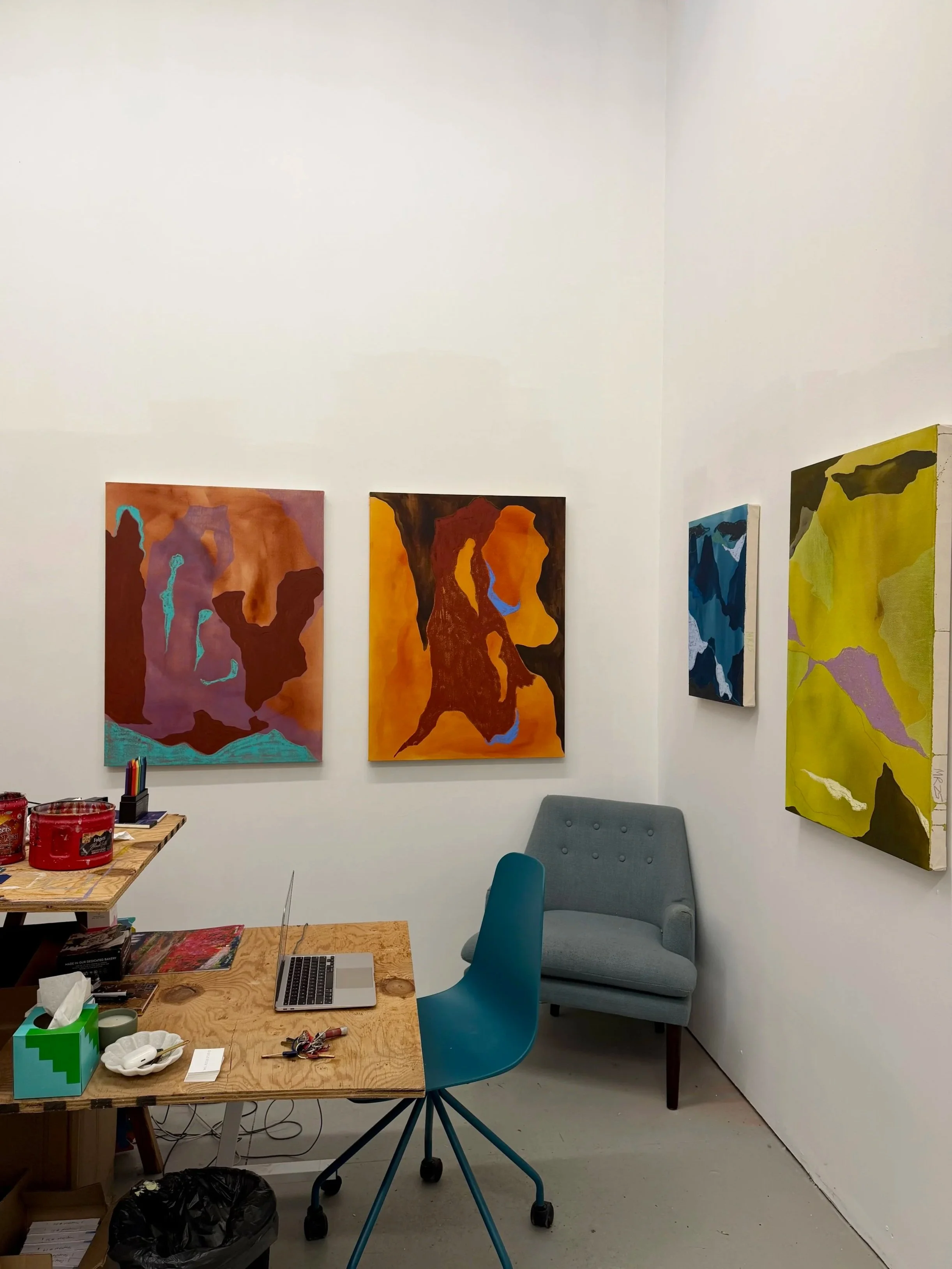
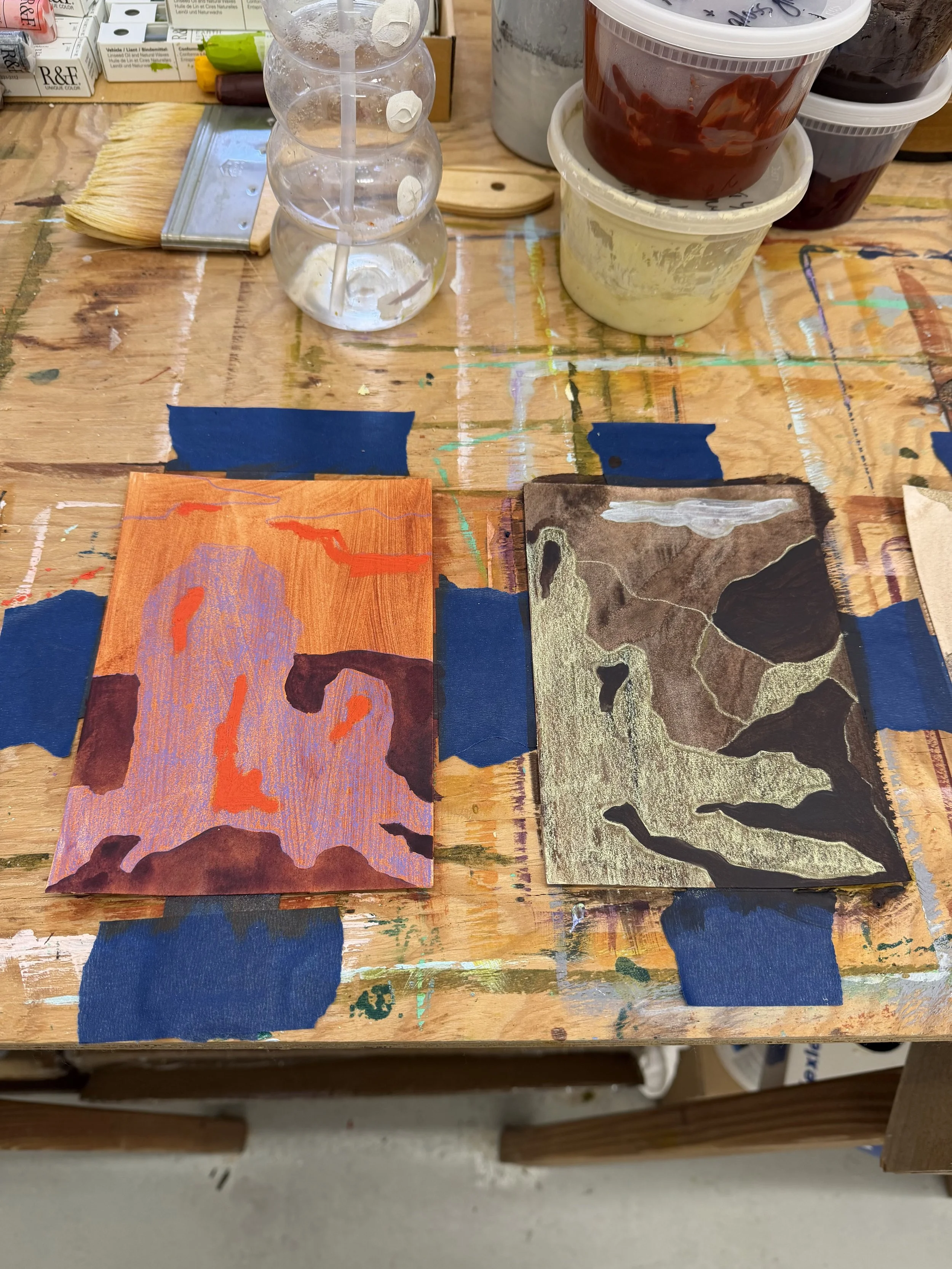
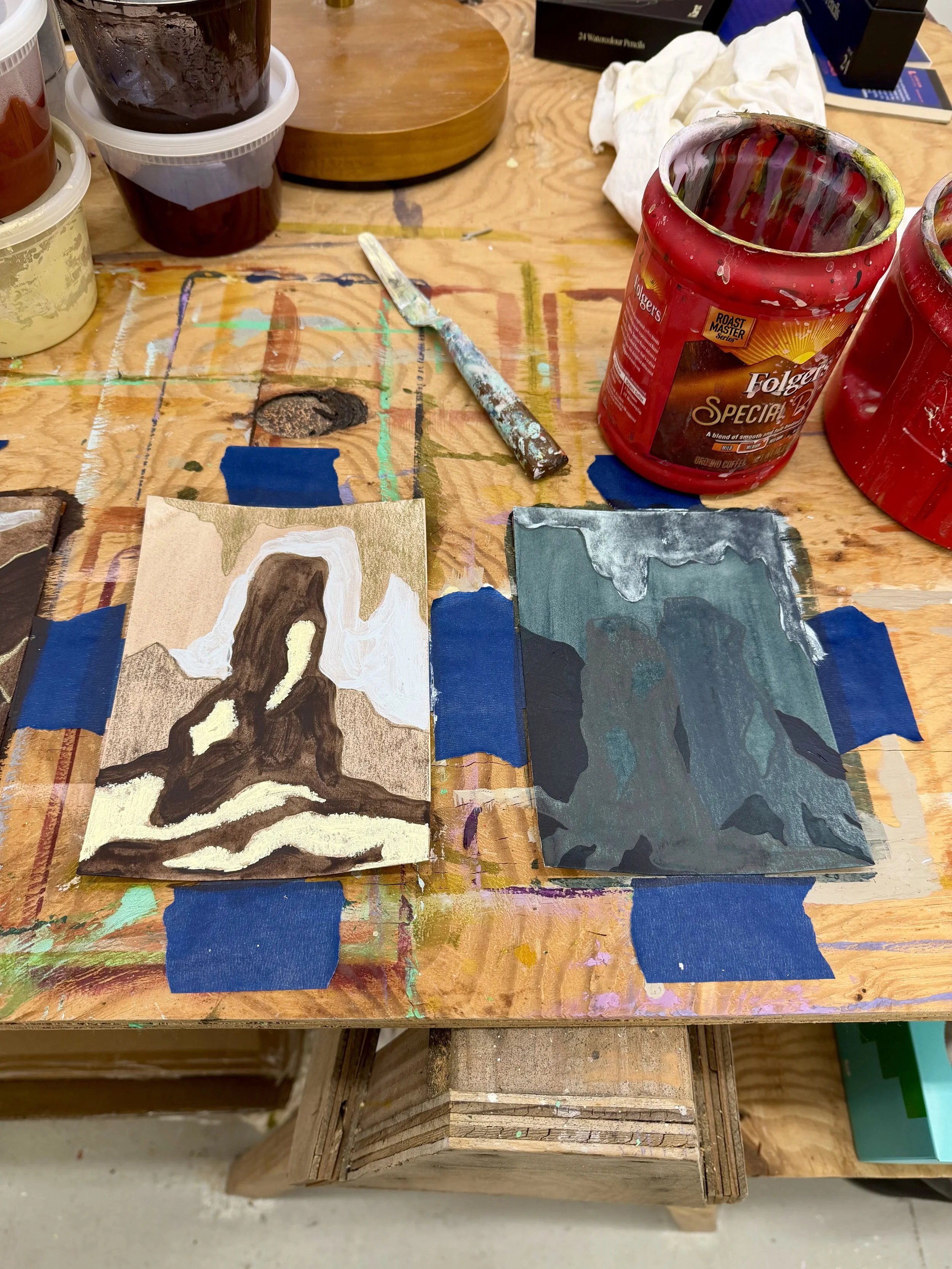
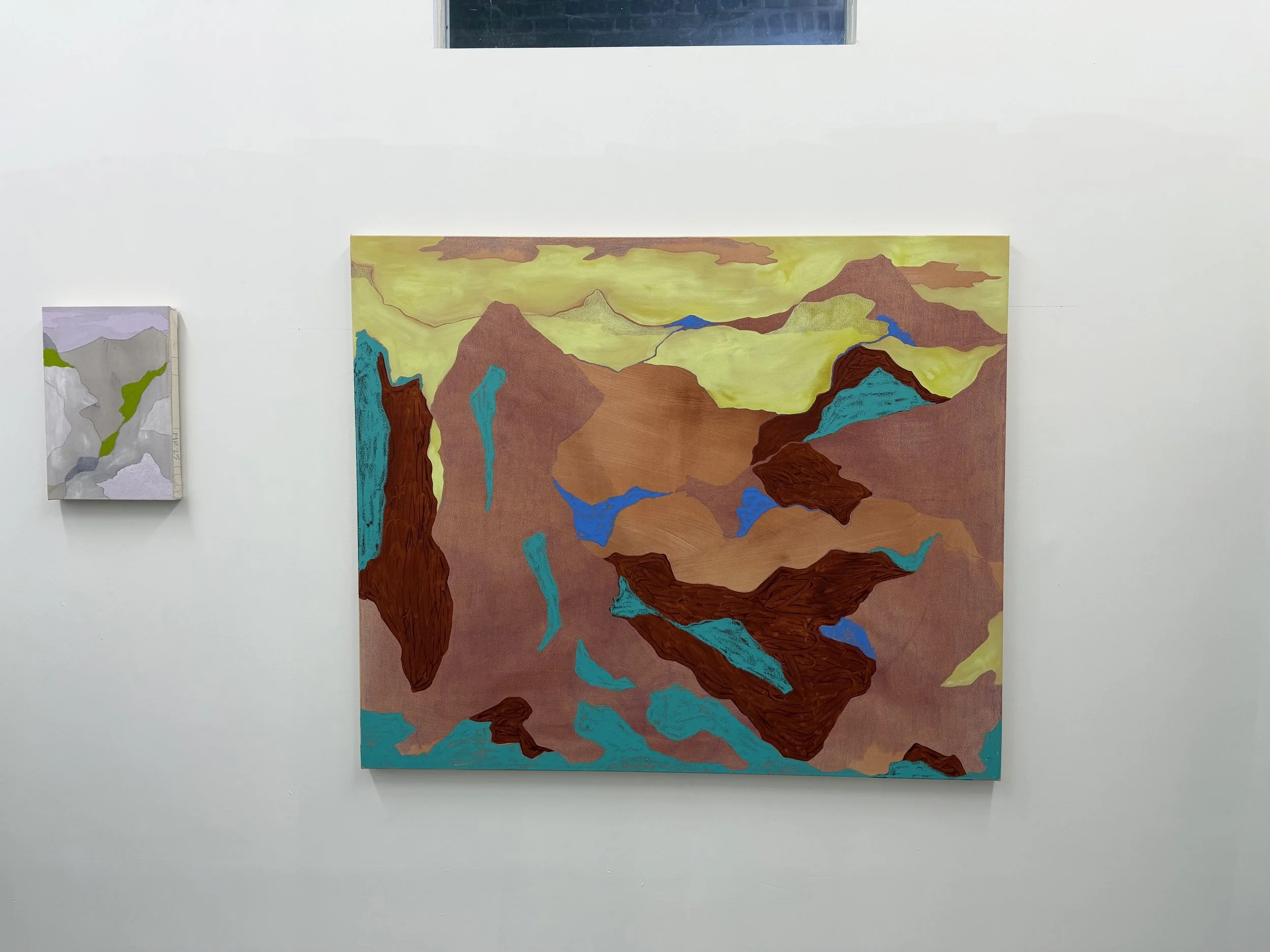
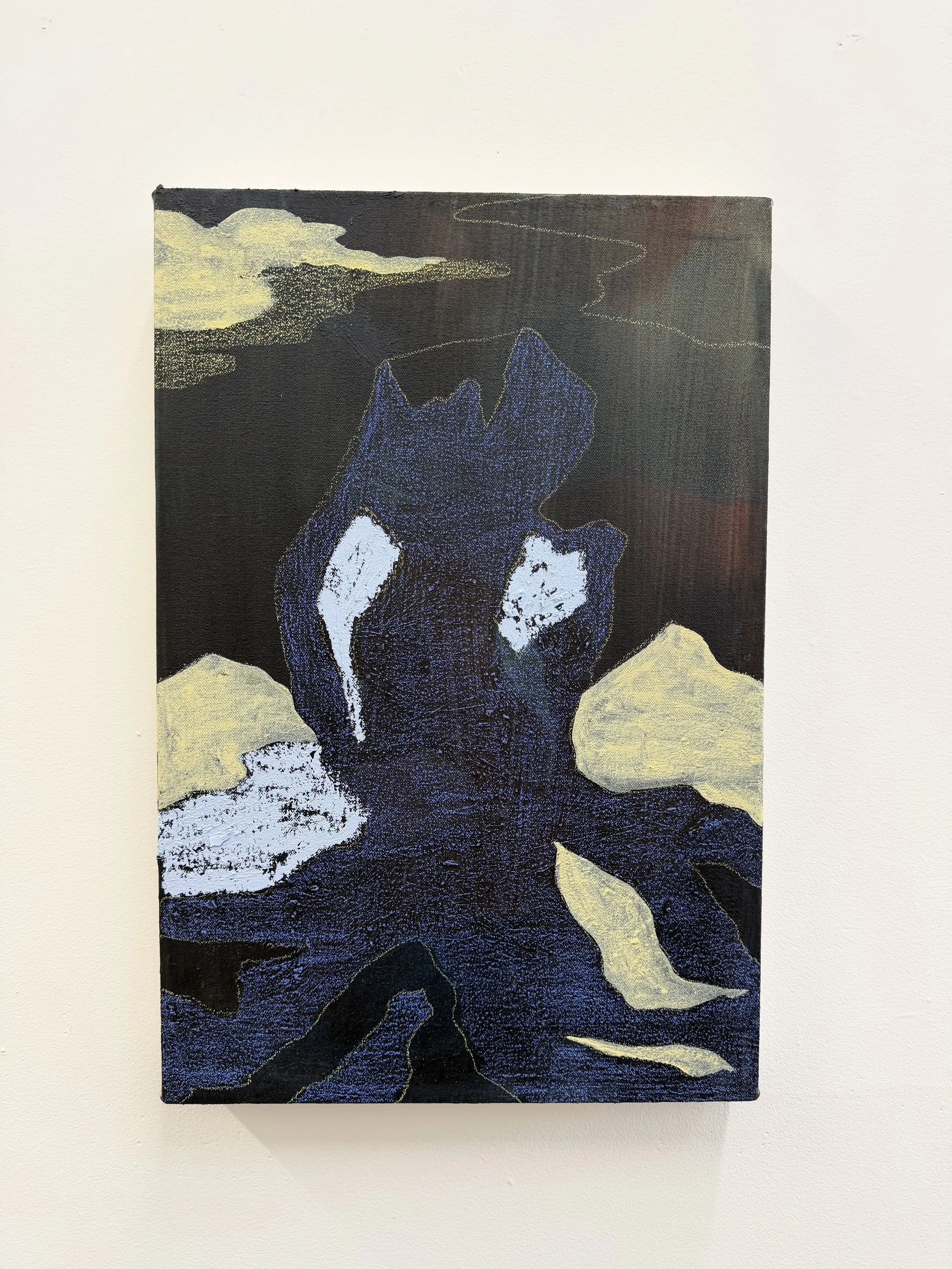
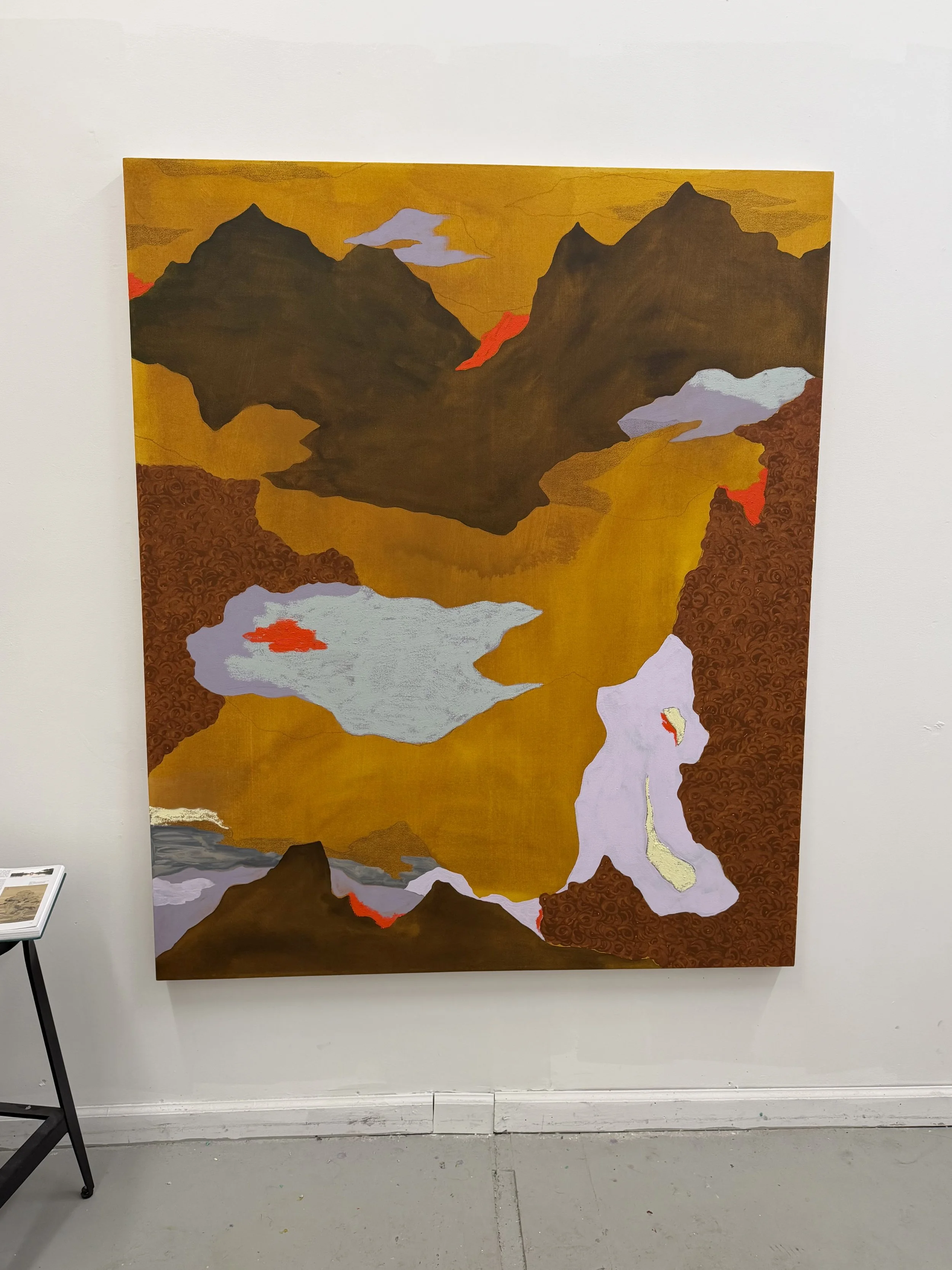
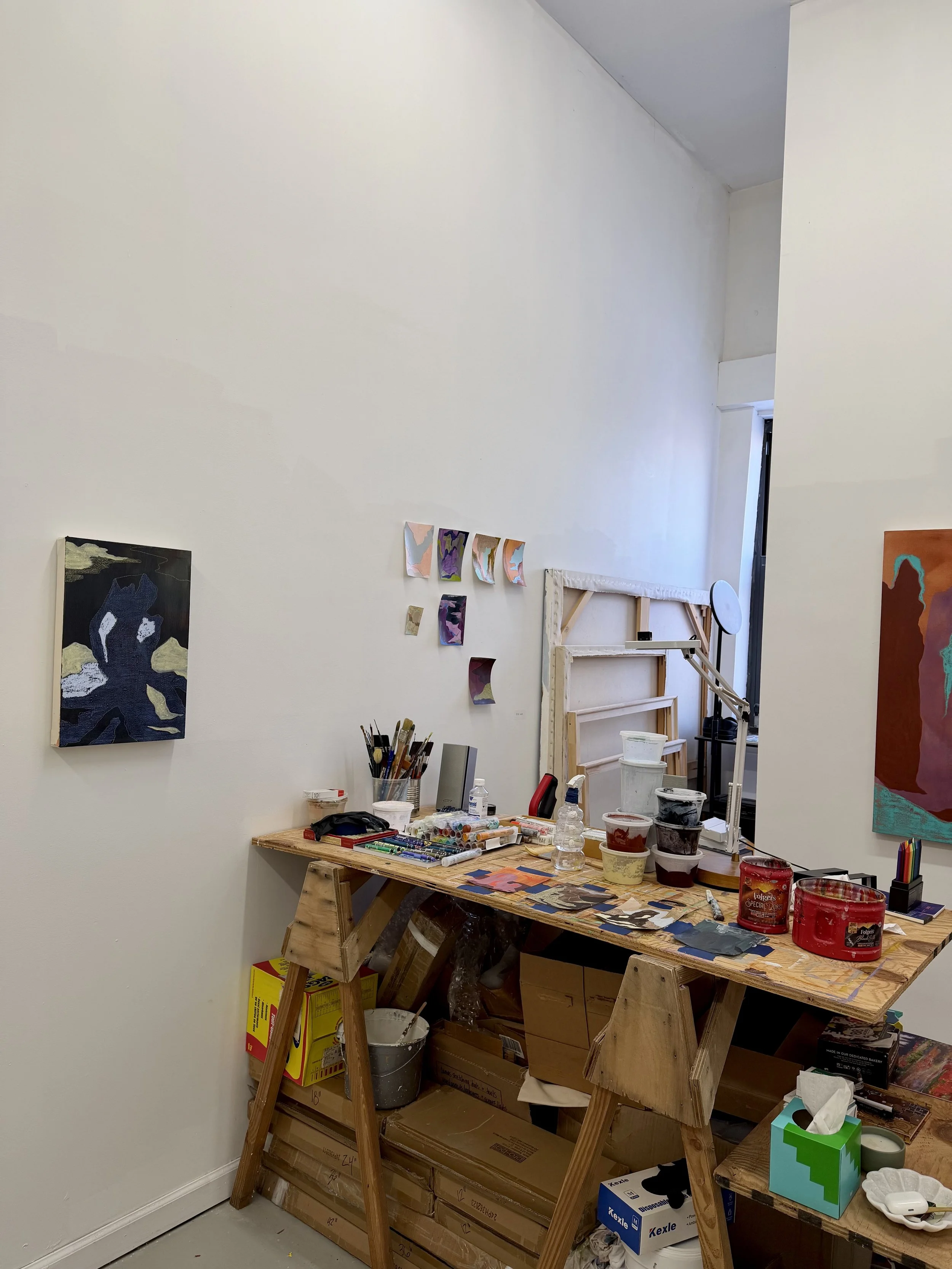
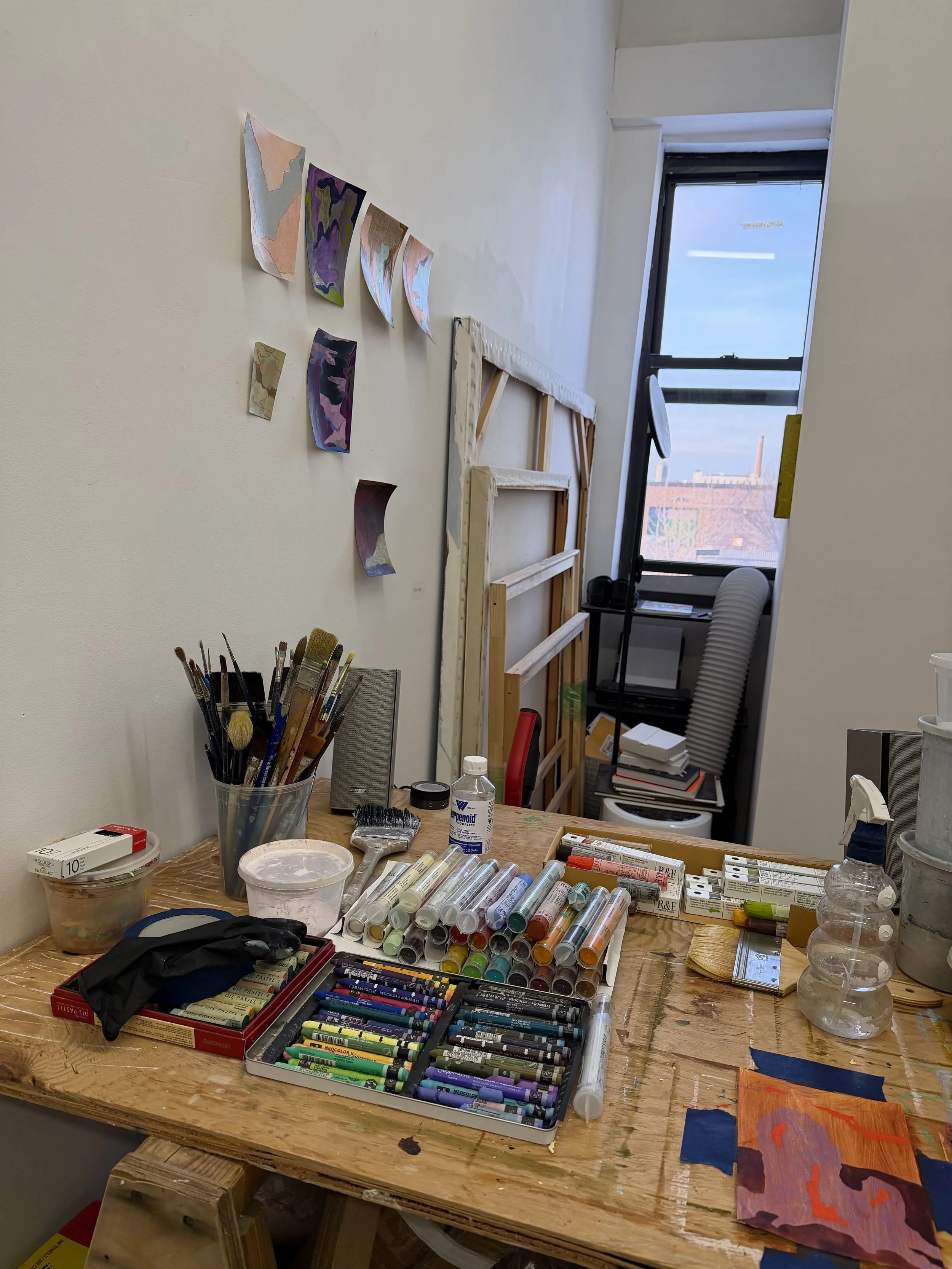
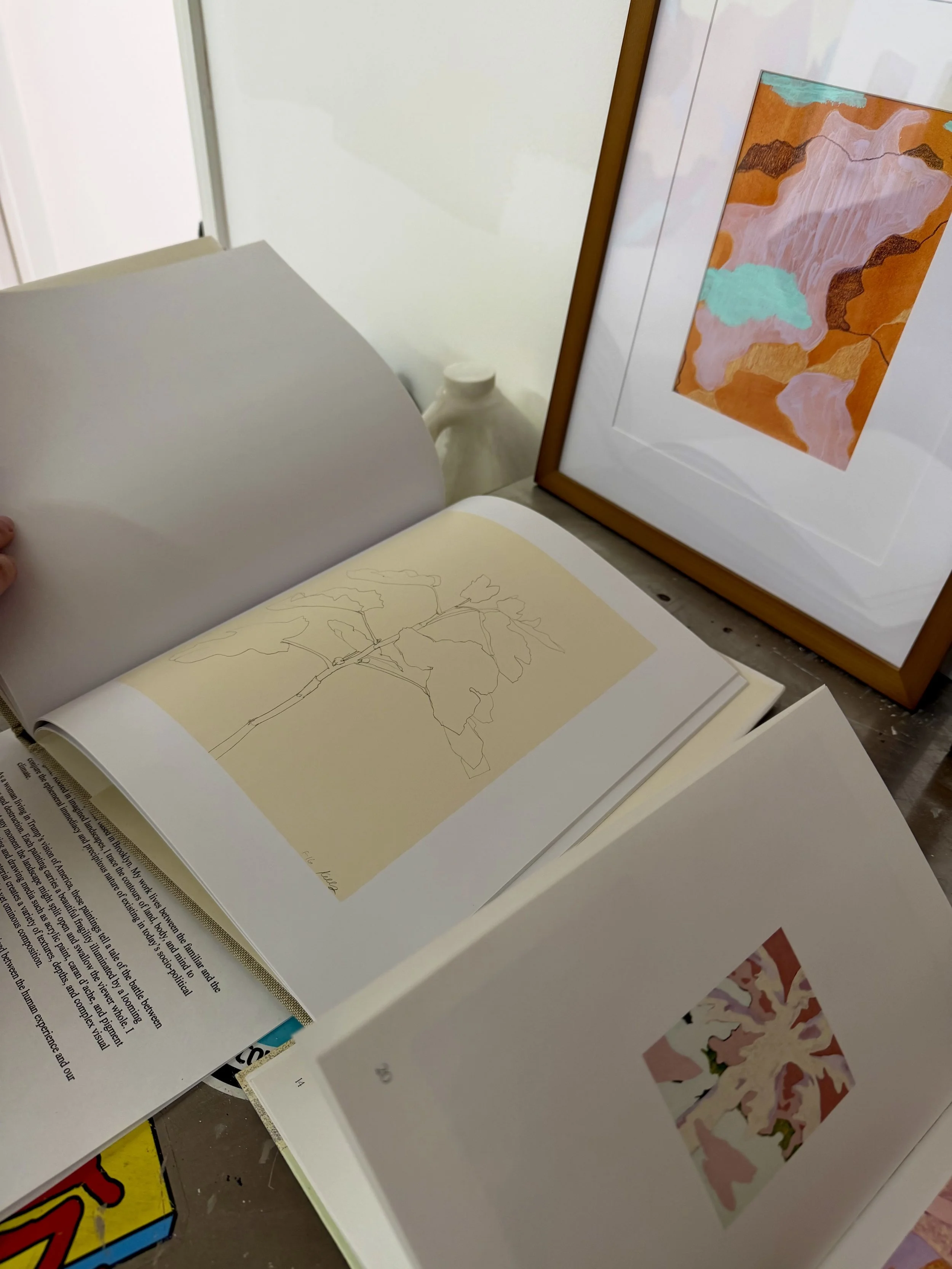
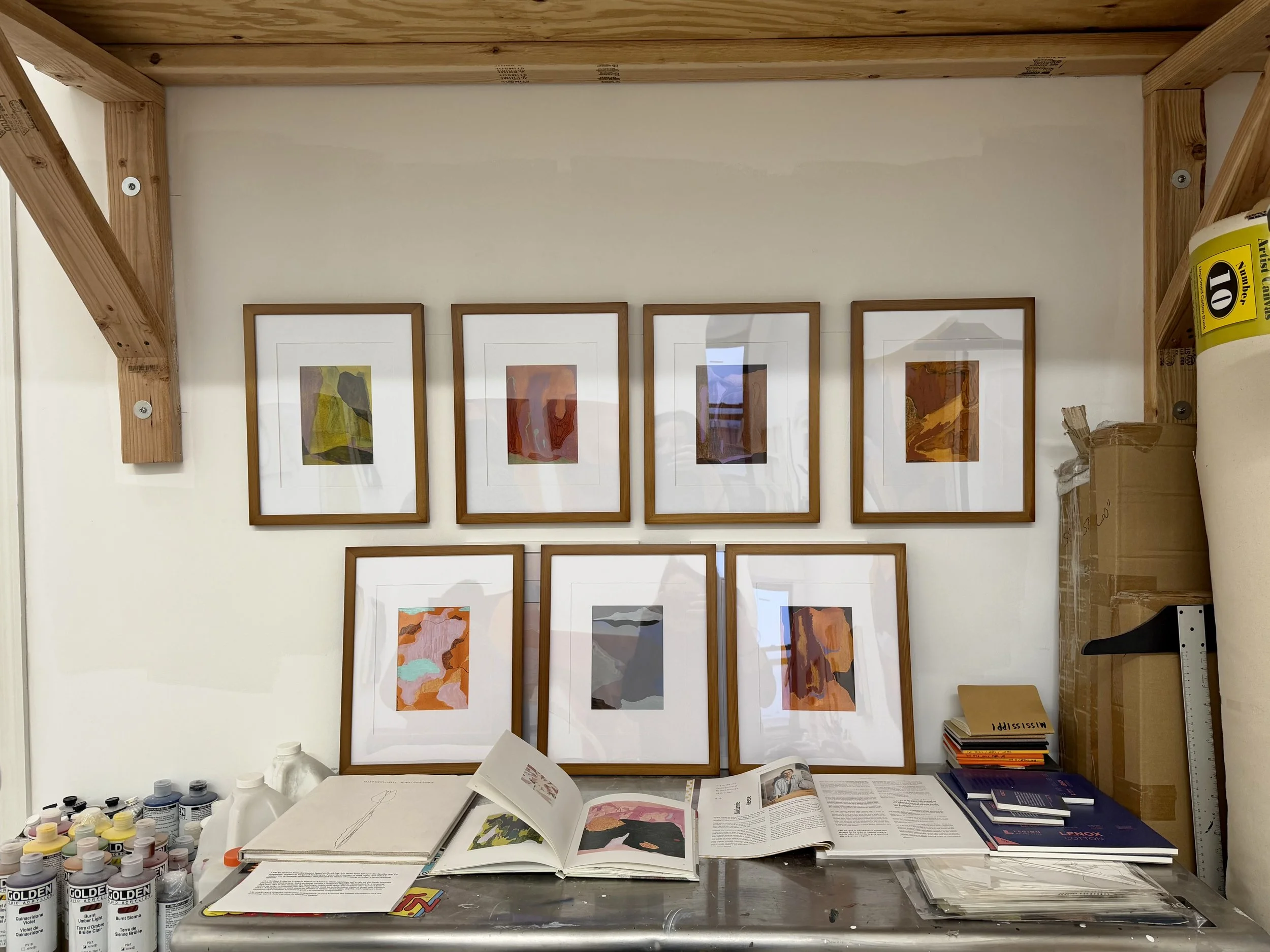
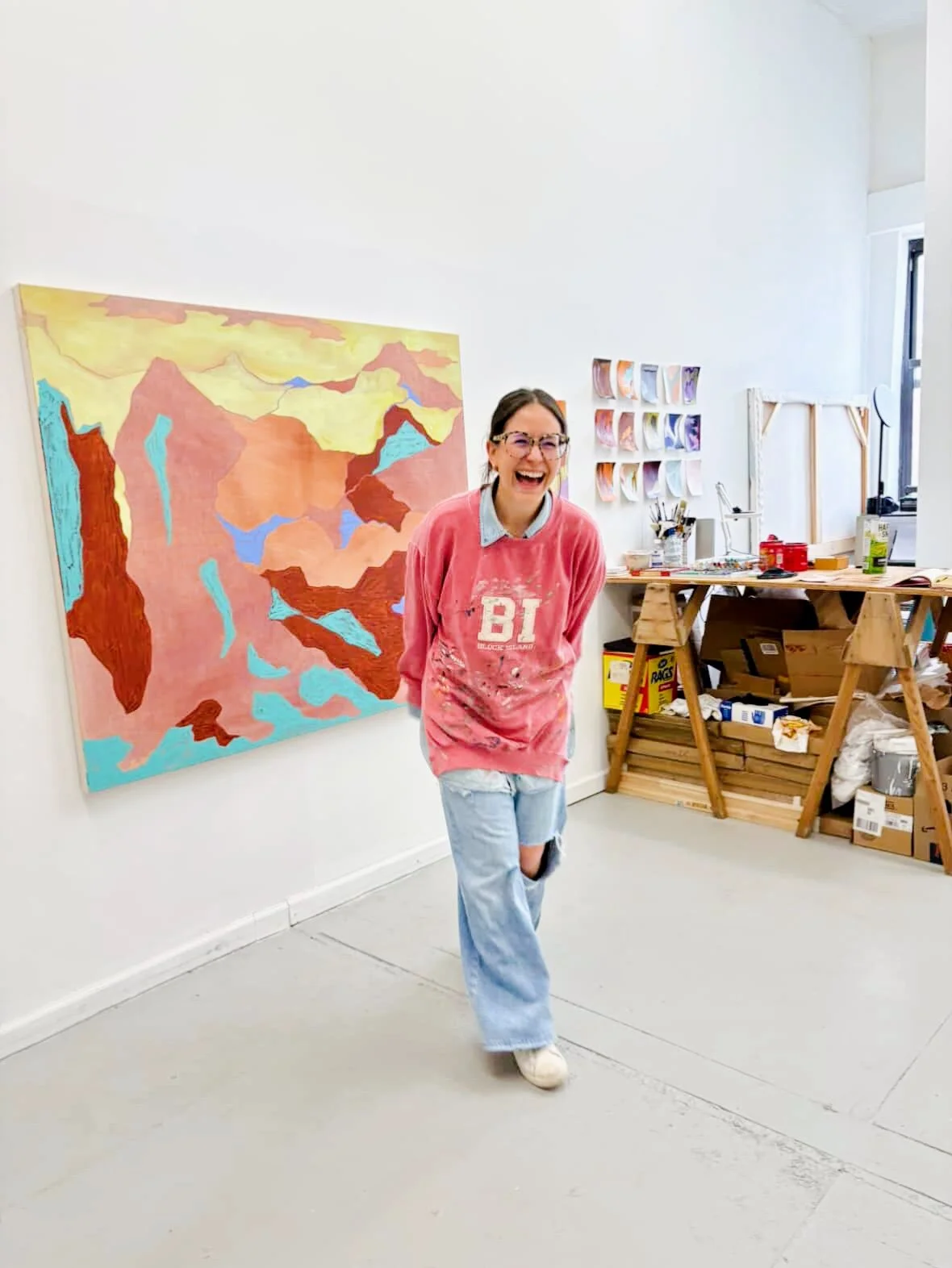
We had the pleasure of visiting Mel Reese’s Greenpoint studio earlier this year, and we are still dreaming of the mystical, watery landscapes she conjures. Working in acrylic, caran d’ache, and pigment sticks, Mel builds imagined worlds from memory, travel, and whatever she is reading, responding to each canvas as it unfolds. To spend time with her work means entering her dreamlike vision of the world, shaped in part by a 2023 residency steeped in the slow, hypnotic pulse of the Mississippi Delta.
We sat down with Mel to talk about her shift from figuration to abstraction, how she balances community work with studio time, and how motherhood (and a new neighborhood business!) has reshaped her relationship to painting.
-
art_works: If you were to describe your practice in just a few thoughtful words, what words would you choose?
Mel Reese: Intentional yet responsive, considered yet tenuous, observational yet studied.
a_w: Tell us a bit about the trajectory of your work. Were you always drawn to abstraction, or was there a particular moment when the work shifted toward these luminous landscapes?
MR: I went into grad school as a figurative painter and came out an abstract minimalist; though I guess I was always pushing the boundaries of representation and abstraction even then. I feel these luminous landscapes, as you put it, are ultimately explorations of how the human form is deeply embedded in the winding, weaving, bumpy, whimsical, bold, smooth edges of nature—the body as landscape and landscape as body.
a_w: Your work is described as abstract formalism rooted in imagined landscapes. The word 'imagined' is interesting—are these landscapes entirely invented, or are they composites of places you have actually been? Have any personal experiences or artistic residencies left indelible marks on your practice?
MR: Well, isn’t anything we imagine just a magical composite of everything we already know? These landscapes are of no place and every place. I pull them from my experiences, travels, and daily city life.
I did have an artist residency down in the Mississippi Delta back in 2023 that set this series in motion. The landscape down there is so water-drenched, so lush, yet so isolating—like dark magic—that it inspired my current series of work.
a_w: If the landscapes in your paintings are imagined, where do you actually go, physically or mentally, when you need to find your way back into the work?
MR: I pull from a few places: my memories, what I am currently reading (reading plays a big role in how I approach a piece), and inspirational photographs. However, a big part of my process is being reactive and responsive to the canvas and composition itself. I let the work tell me where it needs to go.
a_w: Outside of your own painting practice, what are you looking at or experiencing right now that's feeding your work? Any particular landscapes, spaces, or visual traditions you've been drawn to lately?
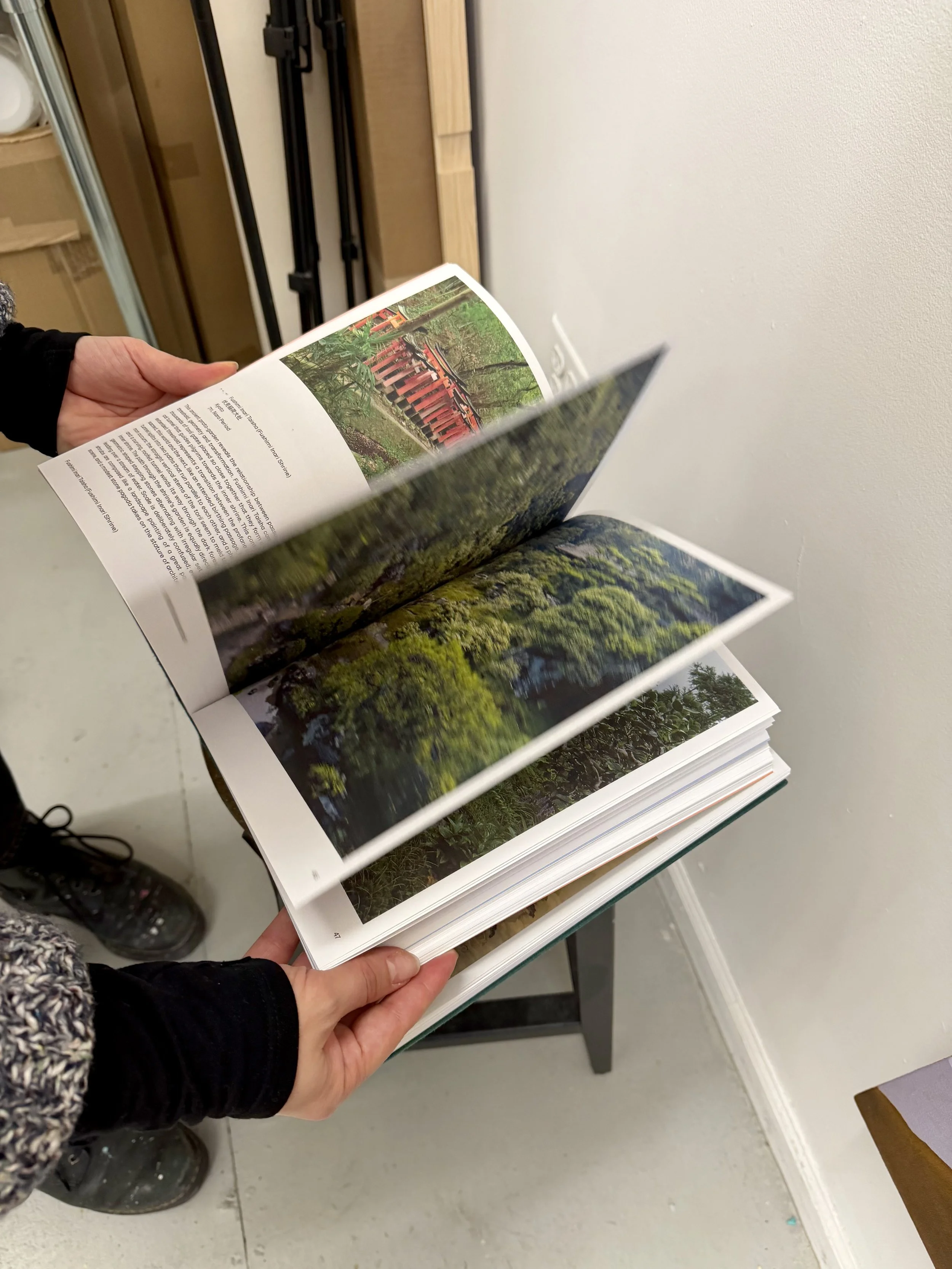
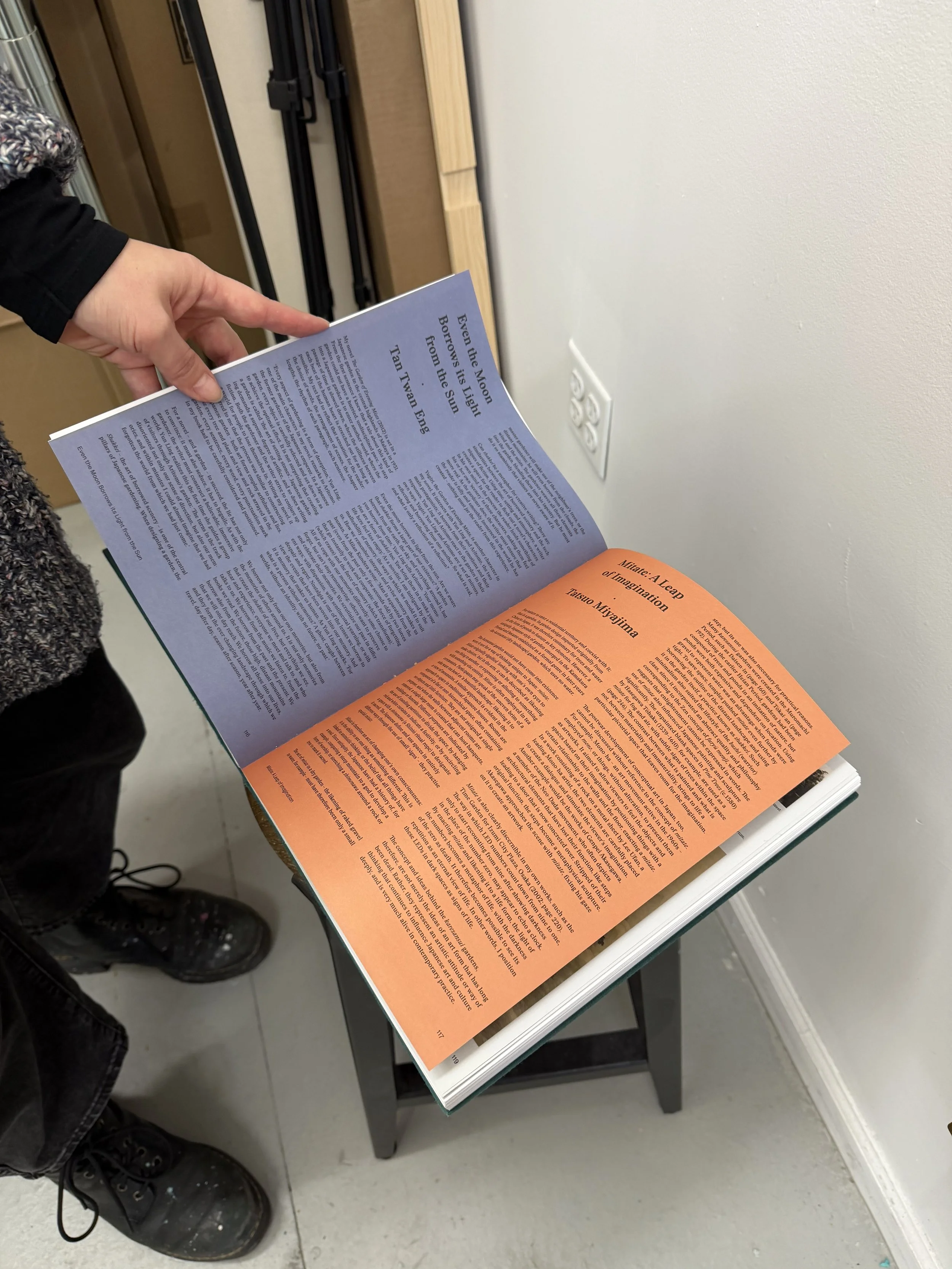
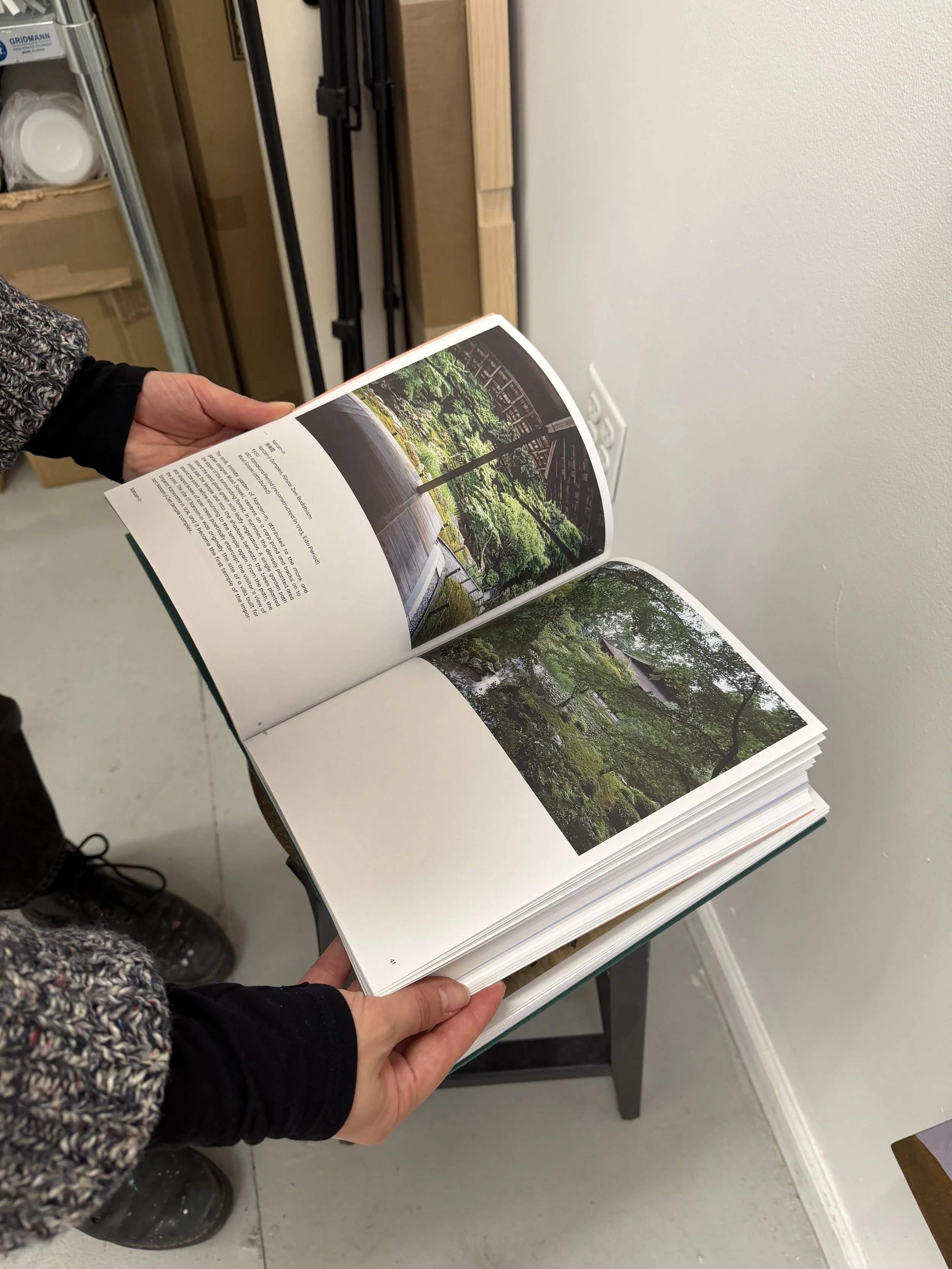
MR: I mentioned this above, but reading plays a big role in feeding my work. Recently, I’ve been reading a lot about the art of Japanese gardening, and it has definitely influenced my work. Less about the act of gardening itself, and more about the philosophy behind how gardeners approach the garden, how they see their own canvas, and how they guide the viewer/visitor through the garden by using purposeful compositional elements and manipulating nature. I utilize this thought process when approaching my canvases.
a_w: You're a managing member of Greenpoint Open Studios, which is such a meaningful commitment to the local art community. How does that role sit alongside the studio practice — do they nourish each other?
MR: I am, and it’s great! It’s a huge commitment, but it’s something I love to do for my fellow artists and community in general. It can be quite time-consuming, so at times it can take time away from my own creative practice, but ultimately I do it to keep my practice going. My art feels at its best when I can share it with others.
a_w: Has becoming a mom shifted anything in your relationship to your work? The way you think about fragility, or the future, or what you're painting toward?
MR: Absolutely. Becoming a mother completely changes who you are, how you see the world, and how the world sees you. I didn’t make art for the entire first year after my son was born; I just didn’t have the capacity. I was literally giving everything to him; I had no space for creativity. But after that first year, I began to crave creativity again, along with the individuality and isolation that came with it. Finding who I was as an artist again after having a baby was a fascinating experience. It brought me back to being me as an individual, not just a mom. It allowed me the space to figure out who I was.
a_w: What's coming up for you this year, in the studio and beyond? Any new ventures or projects outside of painting you're excited about?
MR: The studio is quiet this year as I have started another life project entirely. I opened a local small business in my neighborhood this past May, and it has taken up 98% of my time, so my art practice has admittedly taken a back seat these past months. The business, a children’s shoe and toy store called Giggles & Wiggles, has been my ultimate project, being the first thing in my life that has truly combined all the different parts of me: creative, business-oriented, and a mother. It has been tough and oh so demanding, but incredibly rewarding.
That said, I have a few pieces represented at a local Greenpoint Gallery, Dreams on Command.